Black smoke from the exhaust indicates that the fuel combustion is unbalanced. This means that there is too much fuel in relation to the air with which it is mixed inside the combustion chamber. Explanation: either there is not enough air, or there is an excessive amount of fuel.
If your vehicle has fuel injection, it may be that the sensors of the injection system are not well-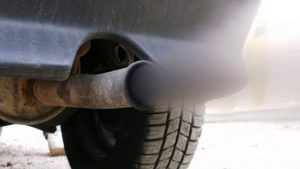 situated. If any one of the sensors are malfunctioning or not well-situated, it’s possible that too much fuel is being injected into the cylinder, creating too rich of a fuel mixture, resulting in unbalanced combustion and therefore black smoke. In this case, you must bring your vehicle to a garage to have the injection system checked out and any faulty sensors replaced.
It may also be that the air filter needs to be changed. A dirty air filter prevents sufficient levels of air, and will consequently cause the air/fuel mixture to be too rich in fuel. Fuel consumption is therefore unbalanced and black smoke in the exhaust will occur.
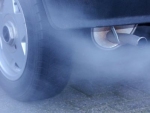 If your car lacks power, particularly when going up hills, it’s possible that the piston segments are defective. If it’s indeed the case, oil can get into the combustion chamber and burn, resulting in blue smoke. Faulty segments will result in decreased power, necessitating a costly replacement of the parts.
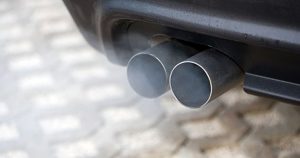 If white smoke emits when you first start a cold car in cool weather, it’s perfectly normal. This is simply the result of the evaporation of the water that has accumulated inside the exhaust system while the car was stationary. Rest assured, all is well!
 To be completed four years after the purchase date of a new vehicle, and every two years thereafter, vehicle inspections are imposed to ensure that the vehicle is safe and within the limits of pollution standards. During the inspection, emissions are tested to verify that air pollutants are below the threshold as set by the regional anti-pollution standards. In the event that a vehicle does not pass emissions testing, it must undergo the necessary modifications to fall back under compliance and be re-tested in order to determine if it is roadworthy or not.